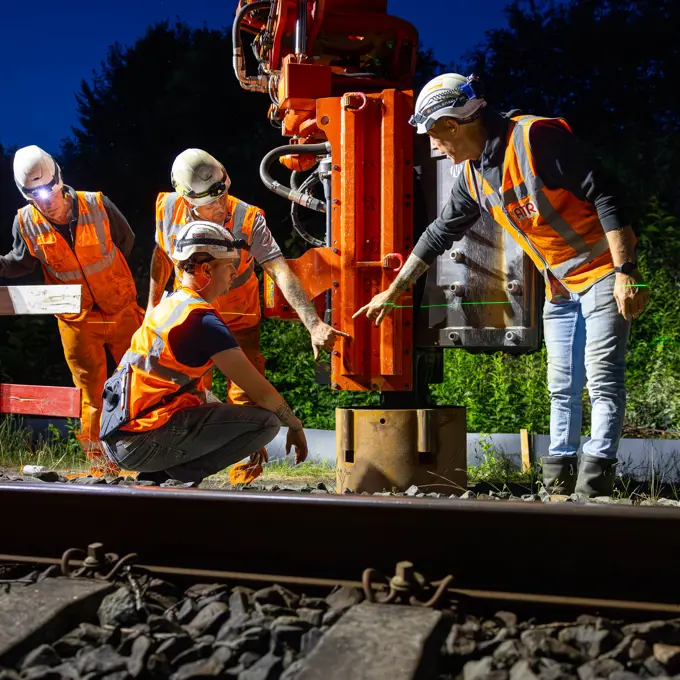
At the beginning of June, Swietelsky applied an innovative foundation method on the Maaslijn: the Swietelsky pipe foundation. For the first time, this technique was applied to the railway in the Netherlands. Overhead line designer Ger Wuite takes us through the story behind this premiere. “In a shift of eight hours, we effortlessly set down twenty foundations.”
The idea originated even before Ger worked at Swietelsky. “At that time, Swietelsky did not yet have a designer's license for overhead lines,” he explains. “A colleague was working on an overhead line project and wondered: can it not be done faster, simpler, and with less risk of cable and pipeline conflicts?” The solution surprisingly came from England.
Green light for pipe foundation on the Dutch railway
There, Swietelsky had already been successfully using this type of pipe foundation. “While it is new for overhead lines, this type of foundation has been used for civil constructions for a longer time,” Ger explains. Engineering firm Movares investigated whether the English method is applicable to the Dutch railway. It turned out to be so. And ProRail also gave the green light. When Ger started at Swietelsky in early 2024, he was tasked with further developing the idea. “I was curious!” he says enthusiastically. “So I started 3D modeling the pipe. Just to see what it would look like.”
Suitable for the Maaslijn?
To determine whether the foundation was truly suitable for the Maaslijn, Swietelsky had a comparative study conducted. Engineering firm ABT compared the performance of the pipe with that of traditional foundations such as the V2B. “We mainly looked at the displacement at the overhead wire height under extreme wind loads.” The results were convincing. “Due to deformation of the structure, the overhead wire may move a maximum of 60 millimeters sideways. The displacement of the overhead wire caused by the deformation of our pipe foundation remains nicely between 5 and 5.5 millimeters at overhead wire height. This allows for more deformation of the rest of the structure, and therefore we can use lighter poles.” Ger indicates that an additional advantage is that the pole on the Maaslijn is firmly anchored in adhesive soil. “With a foundation in adhesive soil, the ground itself provides the stability: it ‘sticks’ to the sides of the pole. The result: a ‘floating’ foundation. Exactly what ProRail likes to see.”
“With two thousand planned foundations, this is no luxury”
The pipe foundation in detail
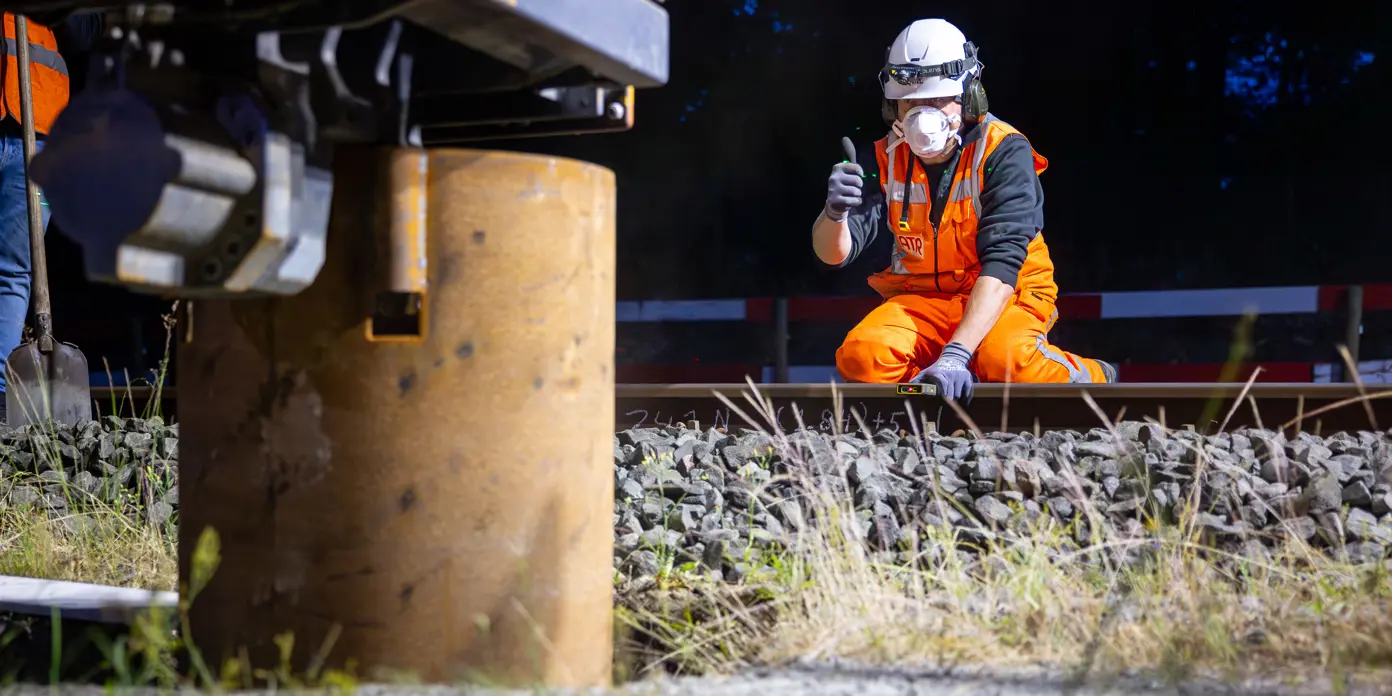
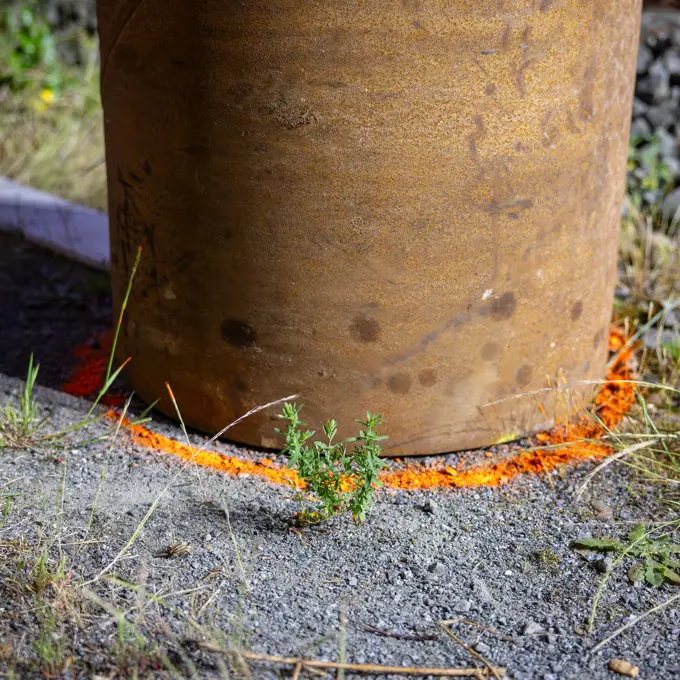
The design is tailored to the subsoil and the forces acting on it. “On the Maaslijn, we use a variant of four meters, with a diameter of 610 millimeters,” Ger explains. “It extends fifty centimeters above the ground, so ProRail can inspect it well.” The pipe is made of uncoated steel. “We do not galvanize or paint it, except in places where people come close, such as platforms.
The wall thickness is chosen so that we still have six millimeters left at the end of its lifespan. Compare it to a rail: it also rusts but remains functional.” Ger adds that the overhead line pole is insulated from the pipe, ensuring safe installation. “In railway terms, we call that ‘guaranteed disconnection’. This means that the power is automatically turned off in case of a fault. Compare it to a fuse in the meter cupboard.” The design also considers animals. “On the pipe, there will be an overhead line pole with a rectangular base plate. This creates an opening, which we cover with a lid. This prevents birds or small animals from nesting in it.”
Installation with Movax vibration technique
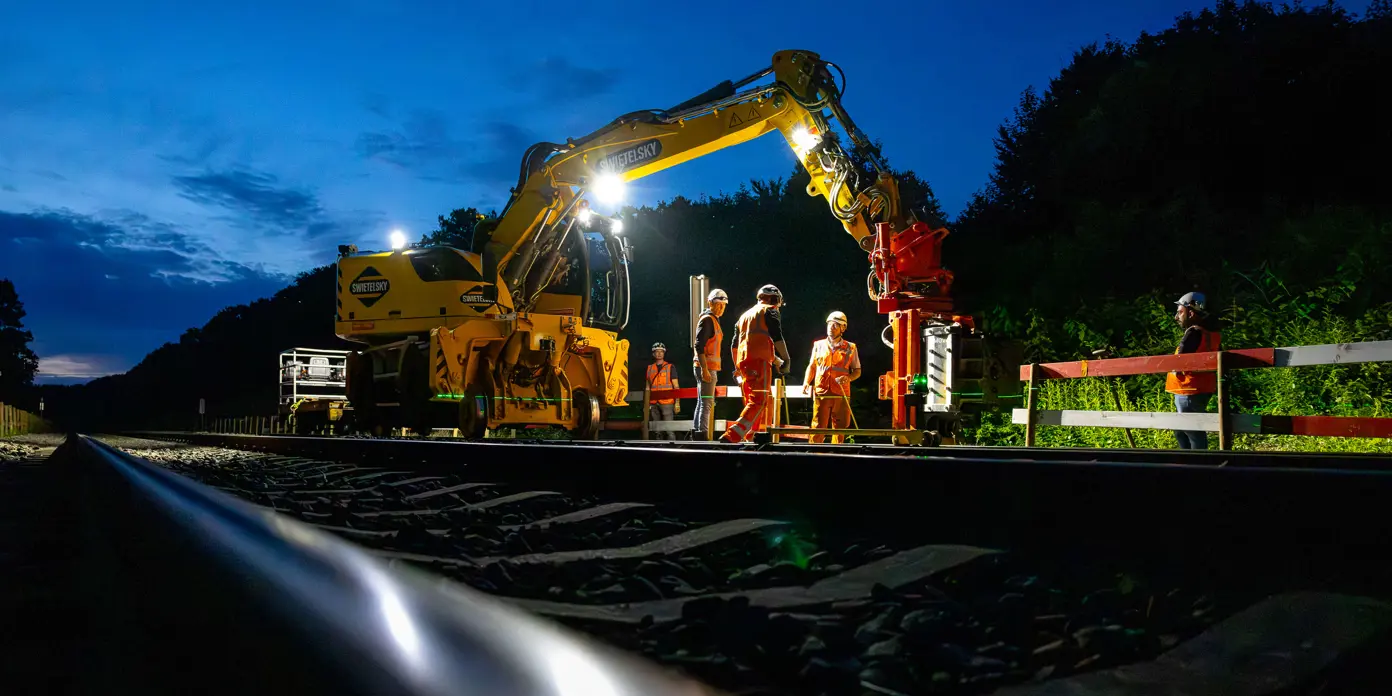
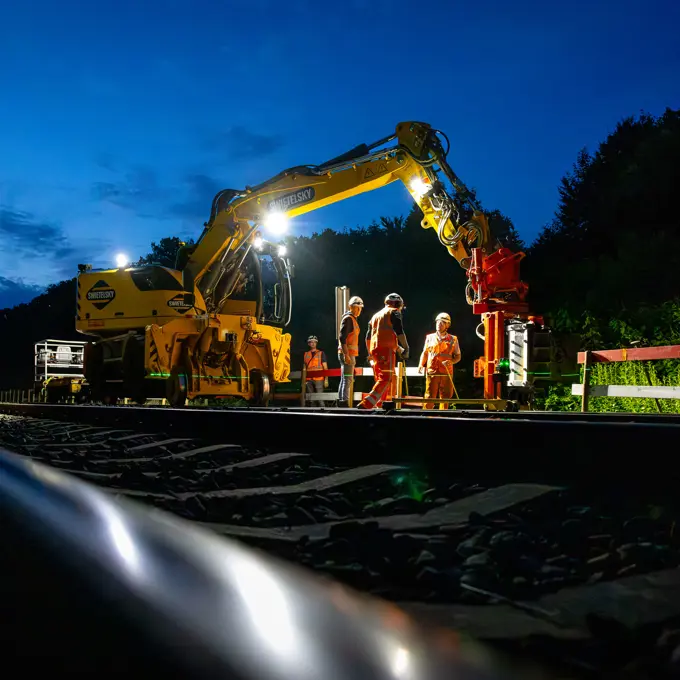
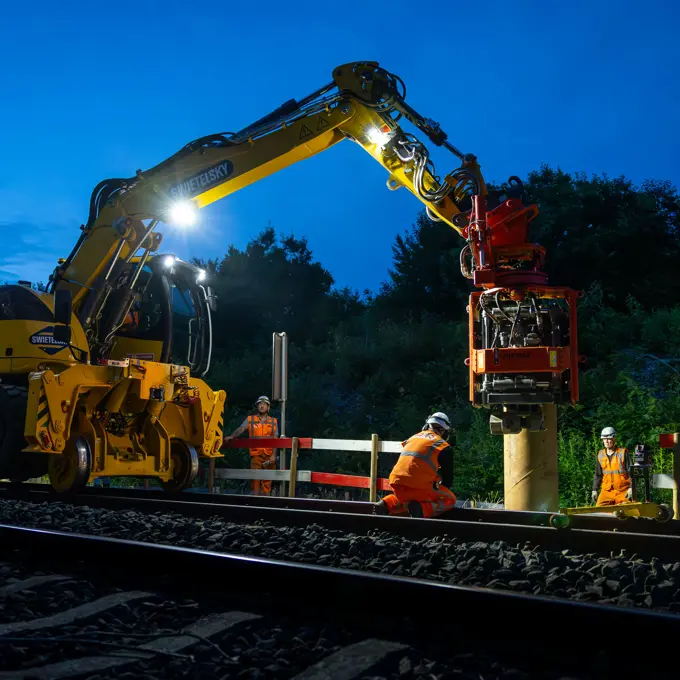
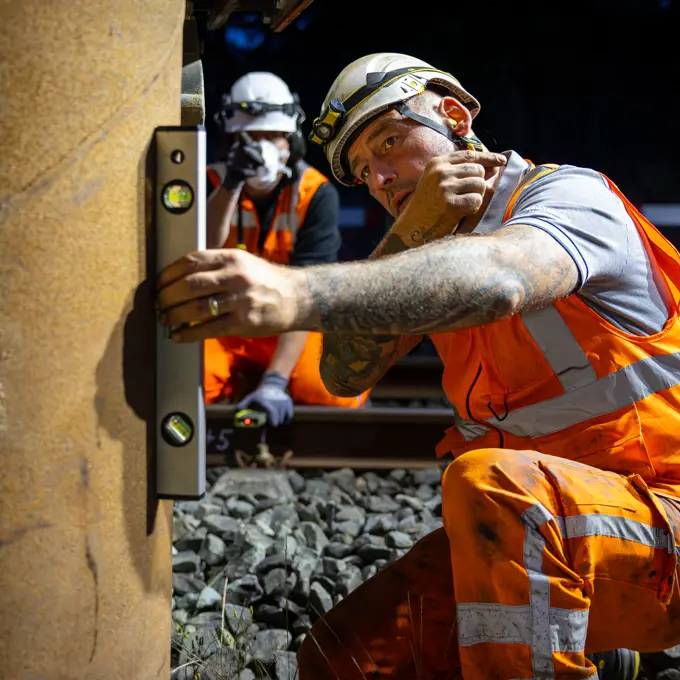
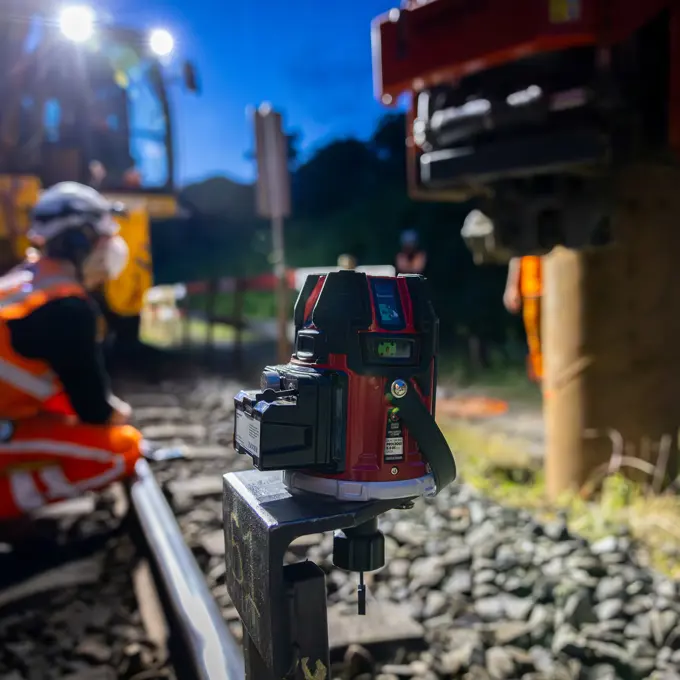
The next question was: how do you get such a huge pipe into the ground? Ger's English colleagues used a special machine, but it turned out to be difficult to allow in the Netherlands. “Fortunately, we had already researched an alternative. We chose the Movax, a standard vibration unit that can vibrate pipes into the ground.” Swietelsky built its own heavy roller, sourced from Denmark. “We equipped it with a control system that operates the Movax. This ensures that the pipe goes perfectly vertical into the ground.” This new approach also positively contributes to the stability of the railway. “Especially in places with an embankment, excavation can weaken the subsoil. By leaving the environment undisturbed, the track remains stable and safe.”
The first test: from theory to practice
All signals were green for application on the Maaslijn. Before ordering two thousand pipes, Ger wanted to conduct a trial first. “Although we had worked everything out in 3D, it is unique for the Netherlands AND for us.” In Alphen aan den Rijn, a foundation needed to be replaced at a culvert under the railway. “That was the perfect moment to test our pipe foundation. And: it worked.”
Time savings without excavation work
With the new method, placing foundations changes from a time-consuming task to a streamlined process. While a traditional foundation takes an hour, the pipe is firmly in the ground within twenty minutes. And that is no luxury, according to Ger. “There are two thousand foundations planned on the Maaslijn; every minute counts. In eight hours, we can place as many as twenty. This leads to shorter outages and thus less inconvenience for the environment and travelers.” Heavy excavation work is also a thing of the past. Instead of digging in large concrete blocks of 2.5 by 2.5 meters, the pipe is simply vibrated into the ground. “This keeps the sand in place, which hardly disturbs the soil. And we significantly reduce the risk of damage to cables and pipelines.”
Innovative technique with a future
The pipe foundation is not only faster and less burdensome for the environment but is also fully recyclable, Ger adds. “At the end of its lifespan, you can melt down the pipe and reuse the steel. A concrete foundation cannot be reused.” In every respect, the pipe foundation is an attractive option. What started as an idea on paper is now a proven innovative foundation technique with a future.
Curious how this technique looks in practice? In a next item, chief overhead line contractor Ben Meerschaert will take us to the Maaslijn, where we are already successfully applying the pipe foundation.
- Photos for this article were taken by André Bouwfotografie.
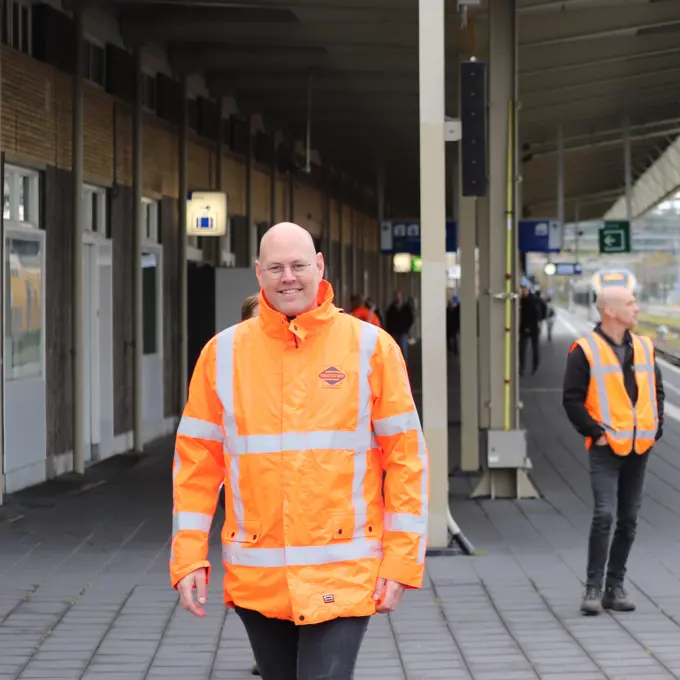
- Ger Wuite - Ontwerper bovenleiding
- © André Bouwfotografie - Swietelsky Rail Benelux
- © André Bouwfotografie - Swietelsky Rail Benelux
- © André Bouwfotografie - Swietelsky Rail Benelux
- © André Bouwfotografie - Swietelsky Rail Benelux
- © André Bouwfotografie - Swietelsky Rail Benelux
- © André Bouwfotografie - Swietelsky Rail Benelux
- © André Bouwfotografie - Swietelsky Rail Benelux
- © André Bouwfotografie - Swietelsky Rail Benelux